
Is the Vaccine the Problem—or Its Delivery System? Optimizing Delivery for RNA Vaccines
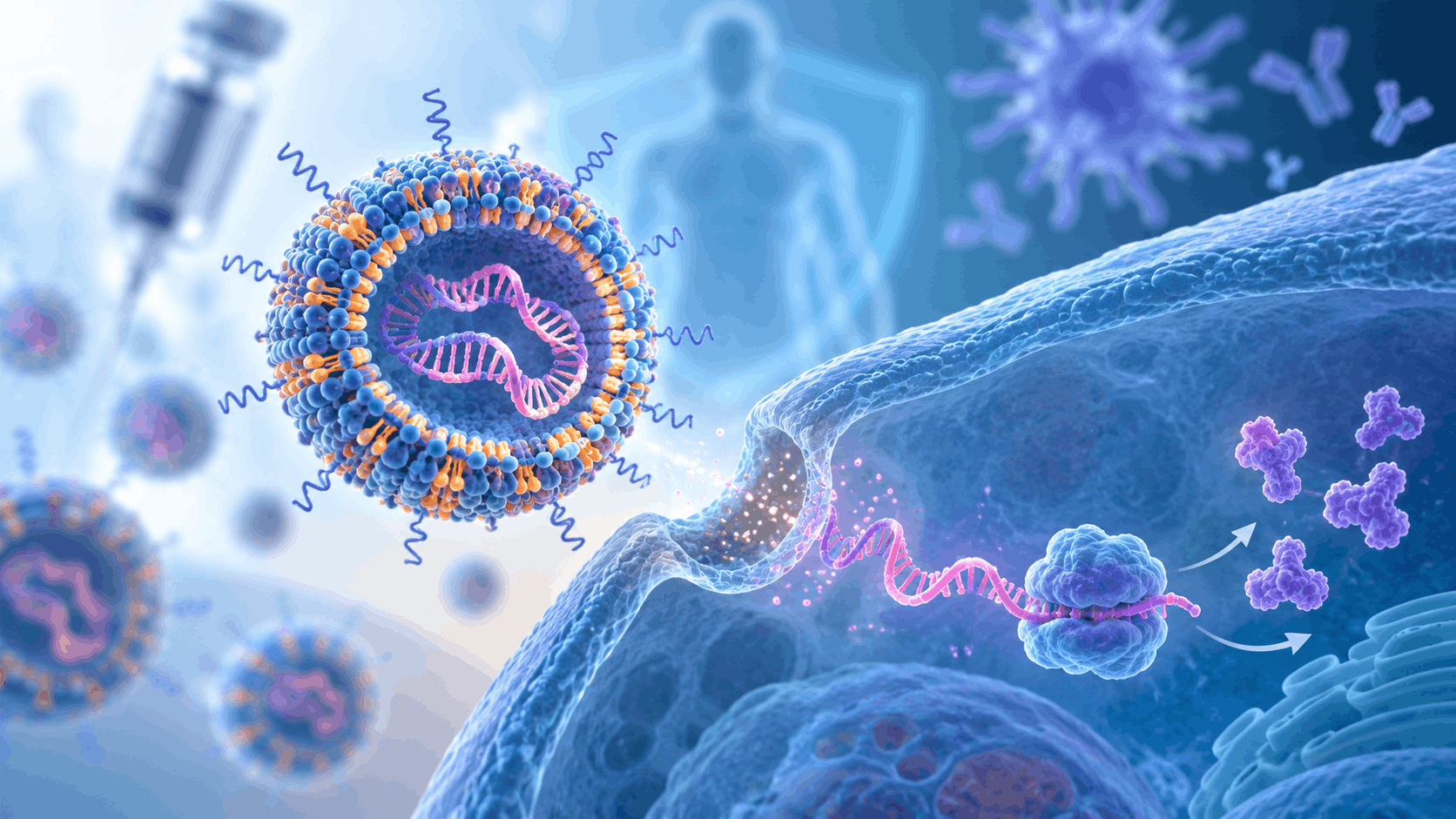
The assumption that a well-designed vaccine payload will automatically translate into strong biological performance is becoming increasingly difficult to defend.
For RNA vaccines in particular, successful antigen design is only part of the equation. The RNA must remain sufficiently stable, reach appropriate cells, undergo cellular uptake and endosomal escape, and release functional RNA into the cytoplasm without creating counterproductive innate immune activation. Research into lipid nanoparticles and other nucleic-acid delivery technologies has therefore shifted vaccine delivery from a downstream formulation consideration to a central development variable.
Vaccine Delivery System Optimization Requires More Than Encapsulation
Effective vaccine delivery system optimization involves coordinating the properties of the RNA molecule with those of its delivery vehicle rather than treating them as independent development tasks.
Through its mRNA vaccine platform, Creative Biolabs supports research spanning mRNA design, production, pharmacological optimization, delivery, and evaluation. Such integrated workflows are particularly relevant as developers investigate RNA vaccines for infectious diseases and cancer.
At the molecular level, optimization can involve sequence and codon design, 5′ and 3′ untranslated regions, capping strategies, poly(A) tail configuration, nucleoside modification, and purification. Creative Biolabs' mRNA pharmacology optimization platform addresses factors including RNA stability, translation efficiency, half-life, protein production, immunogenicity modulation, and delivery.
The objective is not simply to maximize expression. Excessive innate immune sensing can inhibit translation, while insufficient immune stimulation may be undesirable in some vaccine applications. Development therefore becomes a balancing exercise between expression, stability, delivery efficiency, and the intended immune response.
saRNA Raises the Stakes for Delivery Design
Self-amplifying RNA adds another dimension to this optimization problem. Unlike conventional non-replicating mRNA, saRNA incorporates replication machinery that enables intracellular RNA amplification. This architecture may enable more sustained antigen expression and support dose-sparing strategies, but its larger molecular size and biological complexity also place greater demands on delivery-system engineering.
Creative Biolabs' self-amplifying mRNA vaccine platform supports SAM vaccine design, synthesis, optimization, delivery-system selection, and preclinical evaluation.
For developers, this reinforces an important principle: the delivery technology that performs well with one RNA modality should not automatically be assumed to be optimal for another. Particle composition, cellular uptake, endosomal escape, tissue distribution, RNA release, and expression kinetics may all affect performance.
October Webinar Examines the Next Generation of saRNA Delivery
These questions will also form the basis of Creative Biolabs' webinar, Engineering saRNA Delivery Systems for Therapeutics, scheduled for October 20, 2026, from 12:00 PM to 1:00 PM EDT. The session will feature Anna Blakney, PhD, of the University of British Columbia, whose research focuses on engineering self-amplifying RNA and advanced delivery systems for vaccines and therapeutics.
Discussion will focus on molecular engineering of saRNA, nanoparticle optimization, and strategies to improve RNA expression and delivery, while also considering broader therapeutic applications across infectious disease, cancer, and genetic disorders. Researchers can register for the webinar through Creative Biolabs.
As RNA vaccine development progresses beyond proof of concept, delivery-system optimization is increasingly becoming a design decision rather than a formulation afterthought. Matching RNA architecture, delivery technology, biological target, and pharmacological behavior early in development may provide researchers with a more rational route toward evaluating next-generation vaccine candidates.
About Creative Biolabs
Creative Biolabs is a biotechnology service provider supporting vaccine research and development for academic, biotechnology, and pharmaceutical organizations worldwide. Its vaccine capabilities span antigen and nucleic-acid vaccine design, mRNA and self-amplifying RNA platforms, pharmacological optimization, delivery-system development, formulation, and preclinical evaluation. Creative Biolabs' vaccine-related services and research materials are intended for research use only and are not for direct use in humans or animals.